A Real Rogues Gallery………

Have you seen these men?

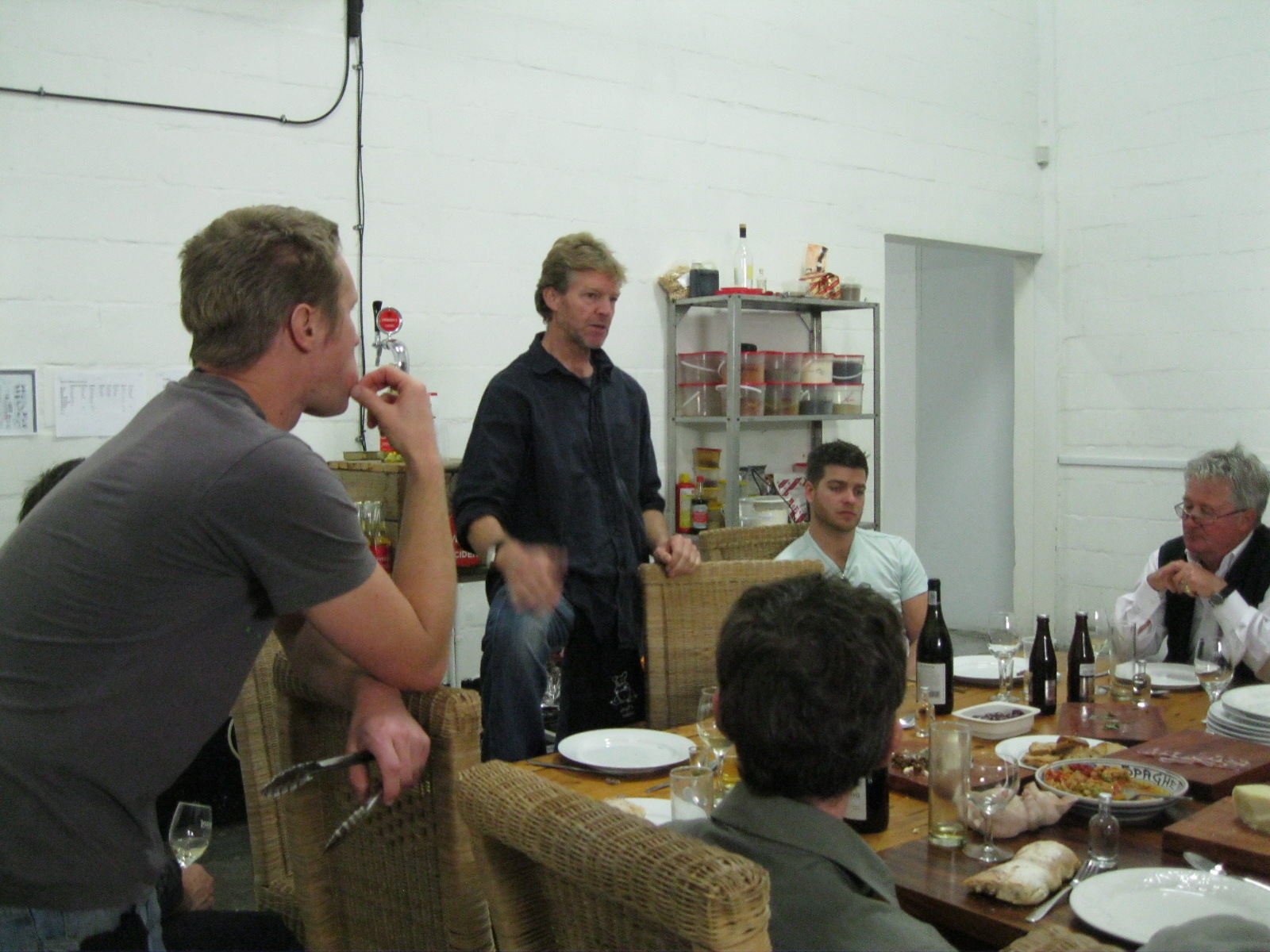
Yesterday saw the inaugural Chef’s Table lunch at our charcuterie. I say inaugural as it was such a success that it will have to be repeated on a regular basis. 10 of Cape Towns best chefs came to relax, have some food and catch up with each other. The proceedings were well lubricated by the presence of William and Michael Everson (Everson Cider), Roger Jorgensen (Jorgensen Distillery) and David Lazarus (Lazanou Wines).

Chef Neill (with two LLs) Anthony who came of age on Saturday braised a delicious pork shoulder and topped it off with super crispy crackling, mustard and dill potato salad and french beans with flaked almonds.

Get stuck in

The riveting visiting Professor Charlie Crowther from Glen Oakes Farm gave us all an education in animal husbandry which sparked off a multitude of debates about sustainable farming, sourcing quality raw materials, understanding the ethics of farming today and one or two interesting questions from PGW about artificial insemination.

Professor Charlie

The fabulous Neil and Claire from Flat Stanley provided some wonderful background sounds while we deliberated, cogitated and masticated and before we knew it the sun had set. A very big thank you to all those who contributed, those who participated and those who made it the special day that it was.

And the band played on...

Sometimes the questions are complicated and the answers are simple – Dr Seuss

Posted in Welcome | 1 Comment

Local Motion ……..

A sandwich that has nothing to do with Kylie

My memory is not one of my strong points and I am forever on the receiving end of a scolding from Commander J for not regurgitating a tasty morsel of information that is deemed to be of relevance. It is not for any subversive reason that I do this but purely from an overload of daily happenings that cause an overflow in my short term recollection and as a result the smallest items drop off. They surface after a few days or even weeks, usually from a third party and then I have to cook something special to redeem myself.

I do however remember with crystal clarity sitting in my father’s car in the summer of 1988 at the beach listening to Kylie Minogue’s remake of The Locomotion. It was number one on the charts that week and was on air (nauseatingly) every couple of hours. I was on holiday, had just passed my drivers license and was spending as much time as I could burning my skin, quaffing the odd beer and believing my incredible dance steps were actually attractive to the opposite sex.

The flashback was due to the fact that Kylie is in town this week but these days instead of the Locomotion my thoughts are on a different kind of Loco. There is a newish way of thinking that is gaining popularity by a group calling themselves Locavores. (“Locavore” was coined two years ago by a group of four women in San Francisco who proposed that local residents should try to eat only food grown or produced within a 100-mile radius. Other regional movements have emerged since then, though some groups refer to themselves as “localvores” rather than “locavores.” – Oxford University Press.)

I think it is something we should all be reflecting on and it is a philosophy I try to incorporate into my business and personal life. The pork I use is bred locally and wherever possible I try to use the best local ingredients. I have recently developed a salami made with cognac. Rather than use a French import I have chosen Roger Jorgensen’s Savignac brandy. He produces it in Wellington and it is every bit as good as a French cognac and best of all it did not have to travel thousands of kilometers to get here.

I really don’t want to eat an avocado in January that comes from Spain and tastes of water (let’s not even mention the price of that avocado either). I’d rather focus on what is in season, fresh and grown on my doorstep. A passionate proponent of eating local is Matt Allison who has over 40 herbs and vegetables growing in his garden. He has started raising a few chicken too and what he can’t produce for his family, he tries to source locally. He is better known to some as I’m no Jamie Oliver and his blog details his experiences as a stay at home dad navigating the kitchen jungle but his focus has shifted to the ethical sourcing of local foods. He is very shy but if you manage to engage him he is a wonderful source of interesting information. He can be found at the Starlings Urban Market every Wednesday from 4 – 6 selling his produce.

So what is the bottom line? I don’t think we will ever be 100% local. There are no coffee beans growing in Cape Town to my knowledge so that means we have to import that at the very least! But there are some very fine local coffee roasters making superb products and there are some outstanding individuals making excellent cheeses, I’ve mentioned the cognac already and the list goes on and on. All you have to do is take the trouble to find out what you are eating, where it comes from and if you are happy with the answers then go ahead. You can find out the provenance of what you are eating very easily and if you can’t then you should start to wonder why.

Loco is the Spanish word for “crazy” or “madman” which was also used in 1988 to describe my dancing.

Posted in Welcome | 3 Comments

Caponata…..

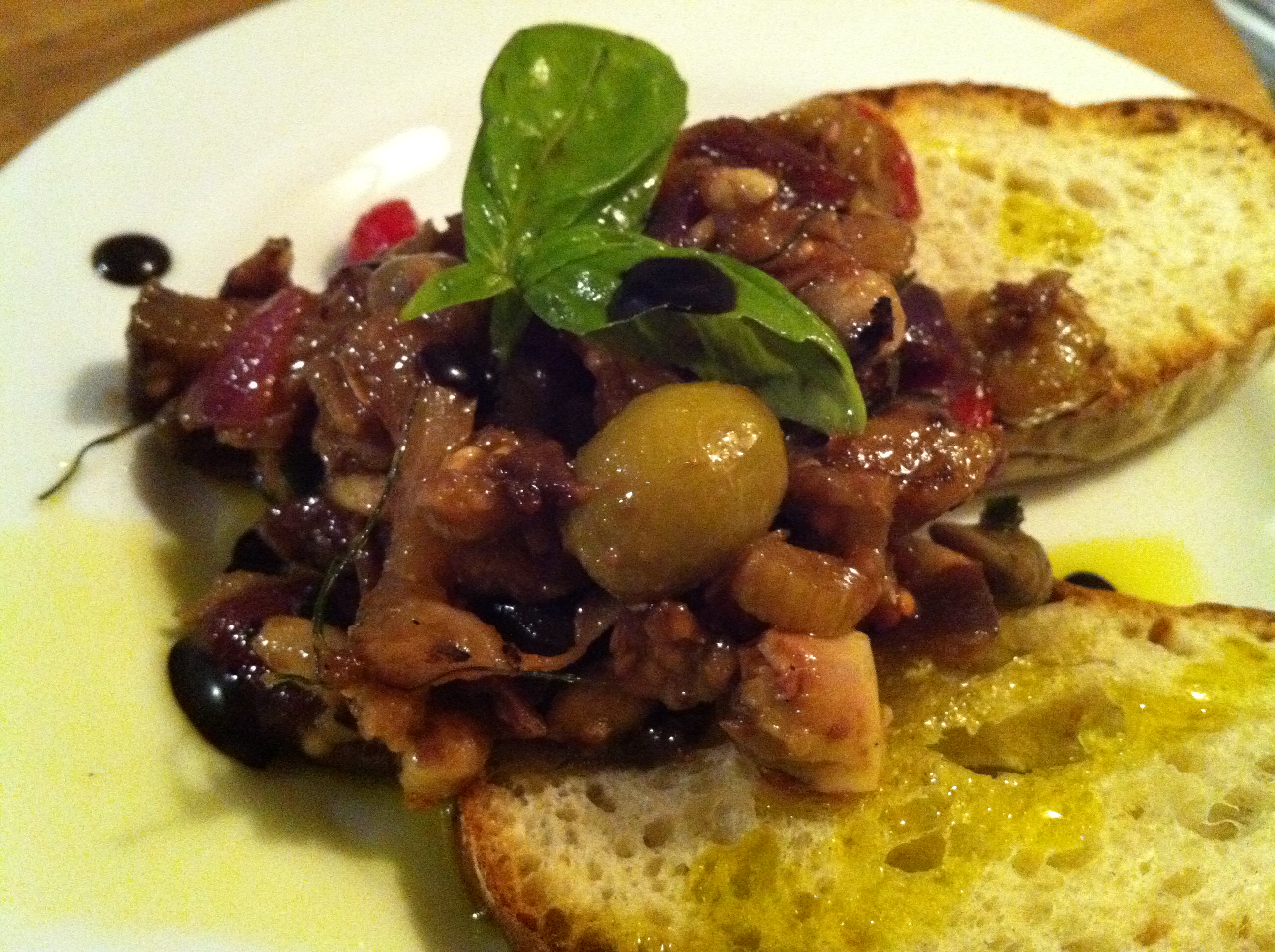
Caponata

If you ever needed proof that the whole is greater than the sum of the parts then here it is. My fennel plant finally decided to grow bulbs after spending the past year just producing wispy little fluff that even a pubescent teenager would be embarrassed to sport on his cheeks. Fennel is one of those “love it or hate it” kind of vegetables due to its slight licorice flavour which leaves few people ambivalent about it. It is nice in salads and goes well with fish but I have been wanting to make caponata ever since I read a Giorgio Locatelli recipe that included fennel. I have included a few things from my fridge that Giorgio obviously forgot to include in his recipe, but I’m sure he will fix that when they do the next reprint.

The thing about caponata is that you have to let the flavours combine and mix together overnight. You also need to eat it at room temperature as the cold subdues the flavours (in fact cold seems to subdue most things). I’m not a fan of raisins so I left them out and if you want a bit of a salt kick add a few anchovies.

Ingredients
2 brinjals, chopped into cubes
1 onion, cut into cubes
2 sticks celery, chopped
1 bulb fennel chopped
20 cherry tomatoes, cut in half
4 artichoke hearts, cut into pieces
20 pitted olives
20 capers
2 tablespoons pine nuts
1 tablespoon pumpkin seeds
4 anchovy fillets, chopped (optional)
1 tablespoon raisins

Fry the brinjal, onion, celery and fennel in batches in olive oil until slightly browned and they start to caramelise. When the last batch is half done add the pine nuts and pumpkin seeds and fry to release the nutty flavours. Place in a large dish and add the remaining ingredients. Add a drizzle of balsamic reduction and toss well. Leave overnight and serve at room temperature with toasted ciabatta.
Caponata goes really well as an accompaniment to fish and chicken or can just be eaten on its own as a snack.

Choose a job you love and you will never have to work a day in your life – Confucius

Posted in Recipes, Welcome | Tagged | 4 Comments

Kalahari Gold Part 2 …….

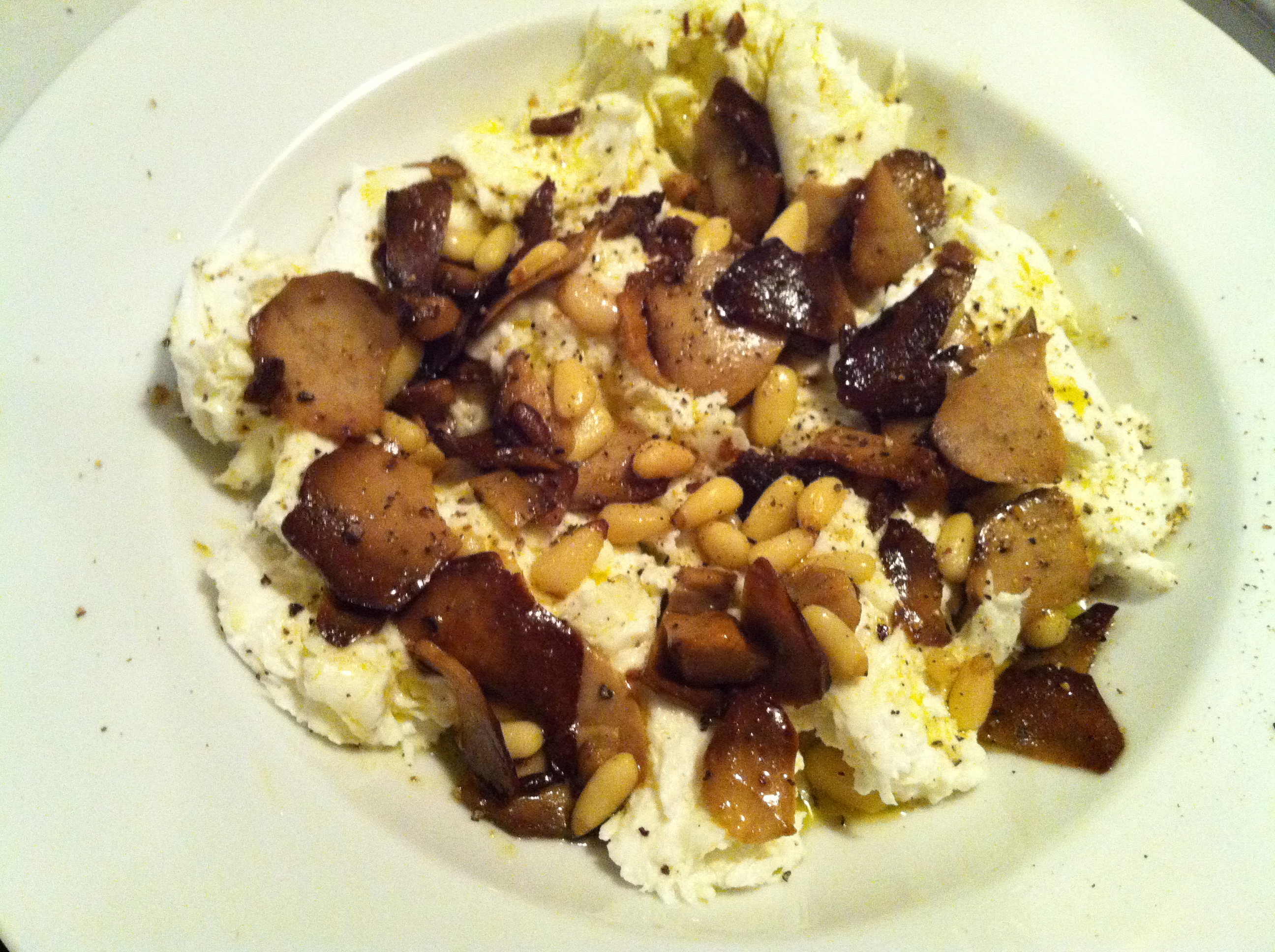
Kalahari and Buffalo Mozzarella

I actually did make something with the last truffle on Monday night. Not enough for a meal for two, I peeled and shaved the truffle and then warmed it in some pistachio oil. A tablespoon of pine nuts for texture, a few drops of truffle oil and then poured it over some buffalo mozzarella cheese. A delicious bruschetta topping for two and ready in 10 minutes. Commander J let out a sigh after the first mouthful so I might have to make this one again. Don’t heat the pistachio oil too much as you want the full nutty flavour to remain. Make sure you use a really good quality cheese as you want something soft and not too rubbery or sour. This combination makes a really good pizza topping too.

Next week I’ll be experimenting with some summer truffles in an effort to make a very special salami. Darryn from Sagra Foods has managed to source some fantastic ingredients for me. It won’t be cheap but hopefully will be something unique and I’ll keep you updated as it matures.

In order to succeed we must first believe that we can – Michael Korda


Posted in Welcome | 1 Comment

Kalahari Gold……..

Kalahari Truffle Pasta

It is definitely all about who you know in life. Our lives are enriched in so many ways by interacting with others and sometimes an unexpected surprise comes along that turns a normal day into something to savour and remember. This happened to me last week when my new best friend, the rather charming mad scientist/alchemist from Wellington known as Roger Jorgensen popped into the factory for a visit. We met for the first time a couple of weeks ago when I was trying to find a local cognac of sufficient quality to use in a new salami I wanted to develop. Roger is the passion behind Jorgensen Distillery and makes a range of artisan spirits. Although he is a bit primitiv our common philosophy and enthusiasm for what we do made made it obvious that our products were well suited. I chose his 14 year old Sauvignac brandy to start with and we eagerly await the results of the trial batch. But I digress….

As he was leaving, Roger gave me a couple of fresh Kalahari Truffles that had been sent to him by a friend from Namibia. Not having planned anything for the Commander’s repast that evening I was immediately filled with the excitement that comes from an unexpected surprise. The truffles are about the size of a golf ball and have a very sandy outside that needs to be peeled away.

Kalahari Truffles

Once peeled, I shaved them into thin slices and pan fried them in butter. They love butter, it complements the subtle flavour and enhances the nutty undertones. The dish is really simple (like me) and just requires your pasta of choice. I used tagliatelli but you can use linguini or even spaghetti. Toss the pasta in the pan with the truffles with a teaspoon of white truffle oil and serve topped with parmegiano. The truffles do not have a strong flavour and the white truffle oil is recommended. Salt and freshly ground black pepper are up to your discretion.

The truffles are not easy to find unless you have a lot of Namibian friends but I have on occasion seen them at Melissas and The Old Biscuit Mill. I have one left in the fridge and will be inventing something tonight with fresh buffalo mozarella.

Be intent on the perfection of the present day – William Law

Posted in Welcome | 3 Comments

A Birthday to Remember….

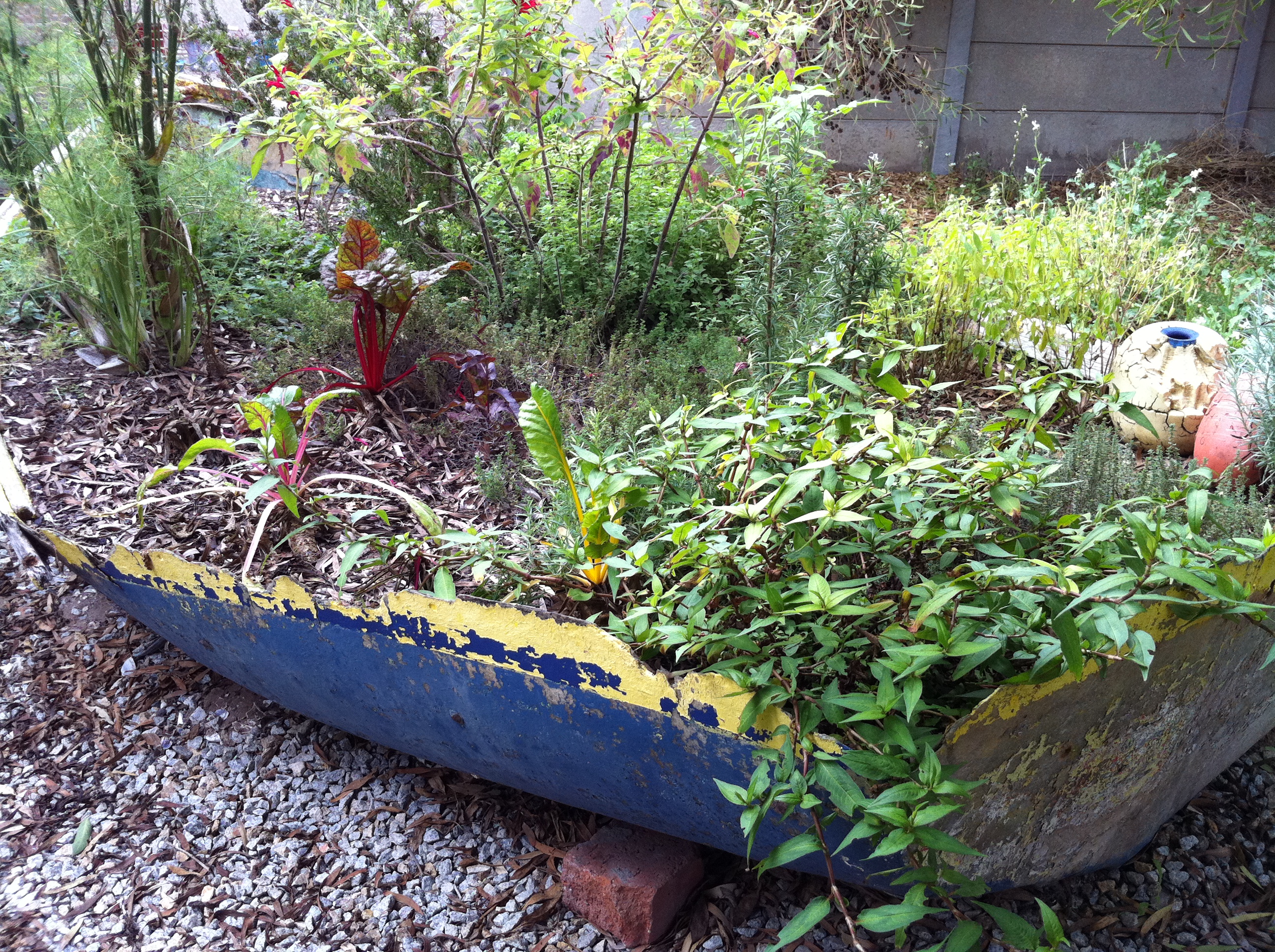
The Salad Boat

Women go through 3 stages in life. In the beginning they are so young that they don’t mind telling you their age, then they do mind, and then they tell you without being asked because they are proud to still be alive. The Commander has just moved into phase 2 and to celebrate her birthday we went to Paternoster for the weekend. Clearly the universe knew that Commander J was coming because the weather was gorgeous – sunny and warm, the wind gentle and the sea a brilliant turquoise (no Charlie, I’m not making this up). The best part however was the excellent food we ate.

There is something very satisfying about eating food that you have grown, collected or harvested yourself. Whether it is just a simple radish from the garden sprinkled with sea salt or curried fresh mussels poached in coconut milk, the knowledge of the provenance of the dish makes it taste better. Perhaps the reason for this is some innate connection to nature that is rekindled or perhaps it is just the fact that it was not purchased in polystyrene from a supermarket. You can replicate this feeling at Kobus van der Merwe‘s restaurant Oep ve Koep. He is passionate about using locally sourced produce and we watched him pick the salad leaves for our starter from the old row boat in the garden of the restaurant. He bakes bread using flour from Kopperfontein, a local flour mill and sources most of his ingredients from the West Coast. The food was delicious, simple, tasty, unpretentious, very reasonably priced as well as being balanced as neither of us felt the need to loosen the belt a notch upon leaving the table. The shop also offers a charming selection of edibles and homeware.

Also worthy of mention is Gaaitjie – Salt Water Restaurant. This was the Commander’s favourite by far and we enjoyed a meal that would have made any restaurant in South Africa proud. The plan was to share which worked well for the butternut and sage tart tatin and the fish spring roll but when it came to the mains and the Commander tasted the sole with crayfish sauce the sharing came to an abrupt end. Fortunately the mussels with chorizo were excellent and peace was maintained.  One thing missing from the menu was a dessert made with chocolate so we  suffered with a dreamy brulee and an espresso.
We’ll definitely be back, sooner rather than later. I left armed with 5kg of flour determined to make a baguette worthy of eating (more about that soon), 500g of west coast fleur de sel, 10 of the biggest, juiciest lemons, assorted heart shaped things and hand made soaps for the Commander and our spirits rejuvenated.

Be intent on the perfection of the present day – William Law

Posted in Welcome | 5 Comments

The Mighty Pepper………

What does it mean when somebody gives you a packet of Habanero chillis? Especially if it is Special K, the sister of Commander J. Is she hoping I’ll think they are pepperdews and eat a couple before spontaneously combusting? Or does she think I’m so cool I can handle the heat? Perhaps it is because she thinks I am boring and in need of spicing up? Or does she just enjoy seeing a grown man cry? I am hoping that it is because she likes me and knows I’ll put them to good use while making a Splash. It did however set off a train of thought in my head about the concept of peppers. There are so many different kinds of peppers and the term is used to describe seeds (black pepper), husks (sechuan pepper) and fruit (capsicum). I seemed to recall that Eskimos have over 100 words for snow but on further online investigation this appears to be an urban legend (according to Wikipedia) and bears absolutely no relevance to this post.
I am going to concentrate on the capsicum variety in this post and will come back to the seed/husk varieties at a later stage.  For me the magic of a red pepper is revealed with the application of heat.
Roasting peppers on an open flame transforms a slightly bitter, watery crunchy thing into a smoky, sweet sublime flavour burst with so many uses. They go well with cheese and cured meats. They can liven up a caesar salad, be made into hot or cold soups, added to hummus, eaten as a side dish, used as part of a roasted vegetable salad and the list goes on. I like to marinate them with a bit of red wine vinegar, olive oil, garlic and chopped parsley and keep them in a jar in the fridge to be used as and when required.
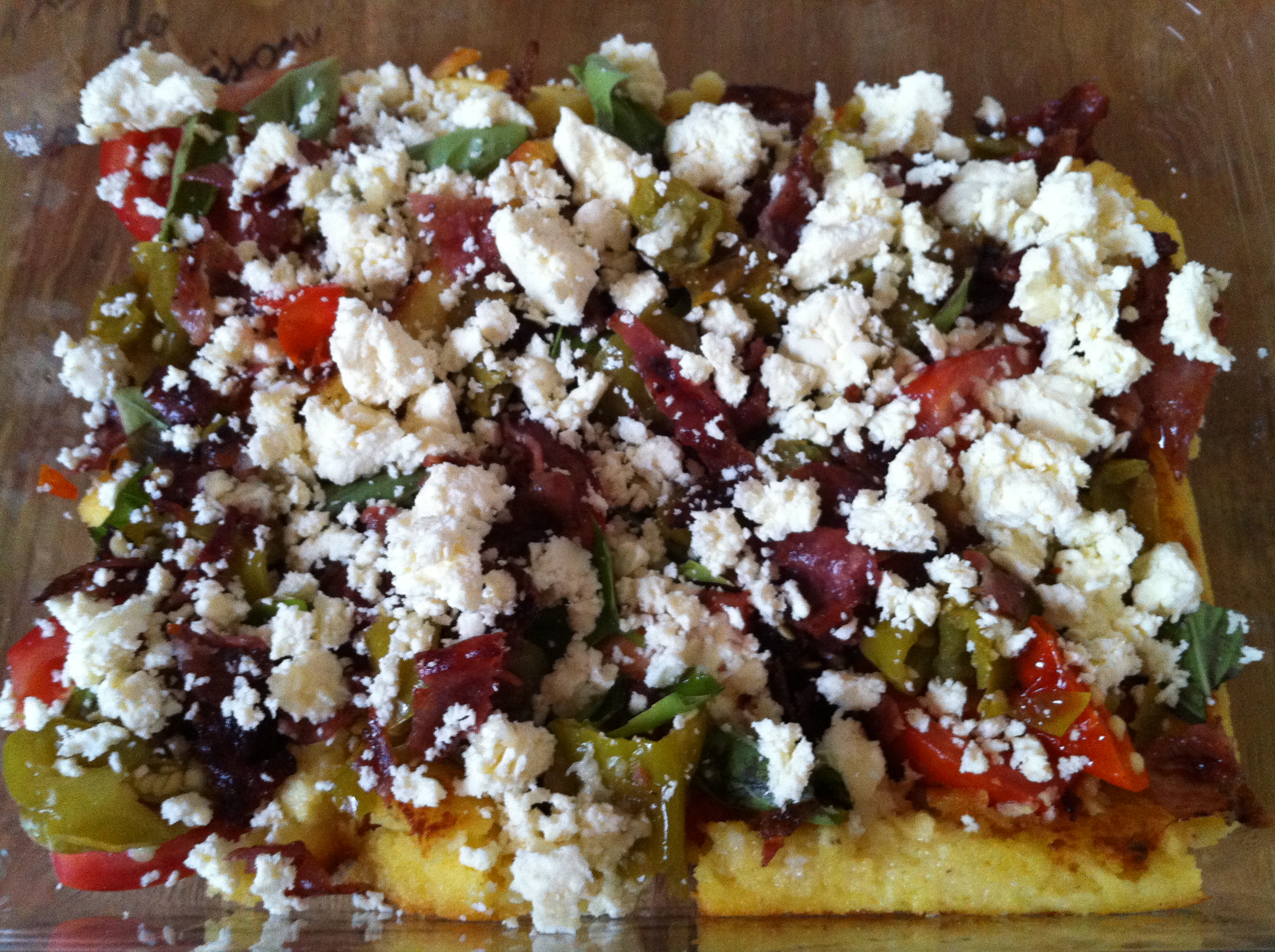
I had some left over polenta wedges in the freezer on Monday and being a little fatigued after my fabulous but extensive Pilates workout at The Studio in Claremont, (my body is being reformed you see, on this slightly medieval but very effective machine called a reformer- Cardinal Ximinez eat your heart out) I decided to make a baked dish with polenta, roasted peppers, feta, fresh tomato, basil, chives and olives. You can add whatever you have leftover in the fridge (artichoke, chilli, asparagus, aubergine, avo etc) it is quick and it makes a great dish for Meat Free Monday.
A loaf of bread, a polenta bake and thou with apologies to Omar Khayyam.

Some tips:
– Roast the whole peppers under a hot grill or over an open flame until the skins are blackened turning regularly. Place them in a 2 litre ice cream tub with the lid on and leave to cool. The steam from the peppers helps to lift the skin off and makes it easier to peel. Peel them but do not wash or rinse them as this will remove a lot of the flavour.
– Deseed the peppers and cut into strips. They are now ready to be used but will be even better if marinaded overnight.
– You can also roast whole chillis (choose mild fleshy ones) with a clove of garlic and lots of olive oil. As soon as you take them out of the oven pour a good glug of balsamic into the pan but watch out for the sizzle and mix well. Don’t bother to peel or seed them just eat them as is or chop up for a roasted chilli sauce. They will last longer in the fridge than it takes to eat them.

Be a first rate version of yourself rather than a second rate version of someone else – Judy Garland

Posted in Welcome | 2 Comments

Battle of the bacons ………

Battle of the Bacons

Who is always your biggest critic? Your children of course. Not being born with the vaguest sign of any brain to mouth filter, mine are definitely not shy to speak their minds. Especially when it comes to food and more specifically when it comes to that stand alone food group we call “bacon”. Even my vegetarian friends go a little misty eyed when the word is used in conversation with them and one can’t help notice the slight quiver on the lip as they contemplate their tofu salad.
So when it came to testing out the latest product in the range – Beech Smoked Maple Bacon – it seemed that the logical test panel to use was my two daughters. Commander J would have been the perfect third person in the panel but was unfortunately in need of some reformation and left her pristine palace in our (by then greasy and floury) hands. To make it even more fun we decided to make a batch of mini brioches featured in the latest edition of House and Leisure Food magazine.
Sunday morning dawned, the weather was beautiful and the tension was palpable. If you listened hard you could hear the theme from “The Good, the Bad and the Ugly” and at any minute we expected to hear the jingle of spurs and coming down the passage. I drew a double strength shot of Calle Copey from Rosetta Roastery to steady the nerves and then we were off. Having followed the brioche recipe to the T (thanks to Evan from Knead for the fresh yeast), we popped them in the oven for 25 minutes and started preparing for the duel.

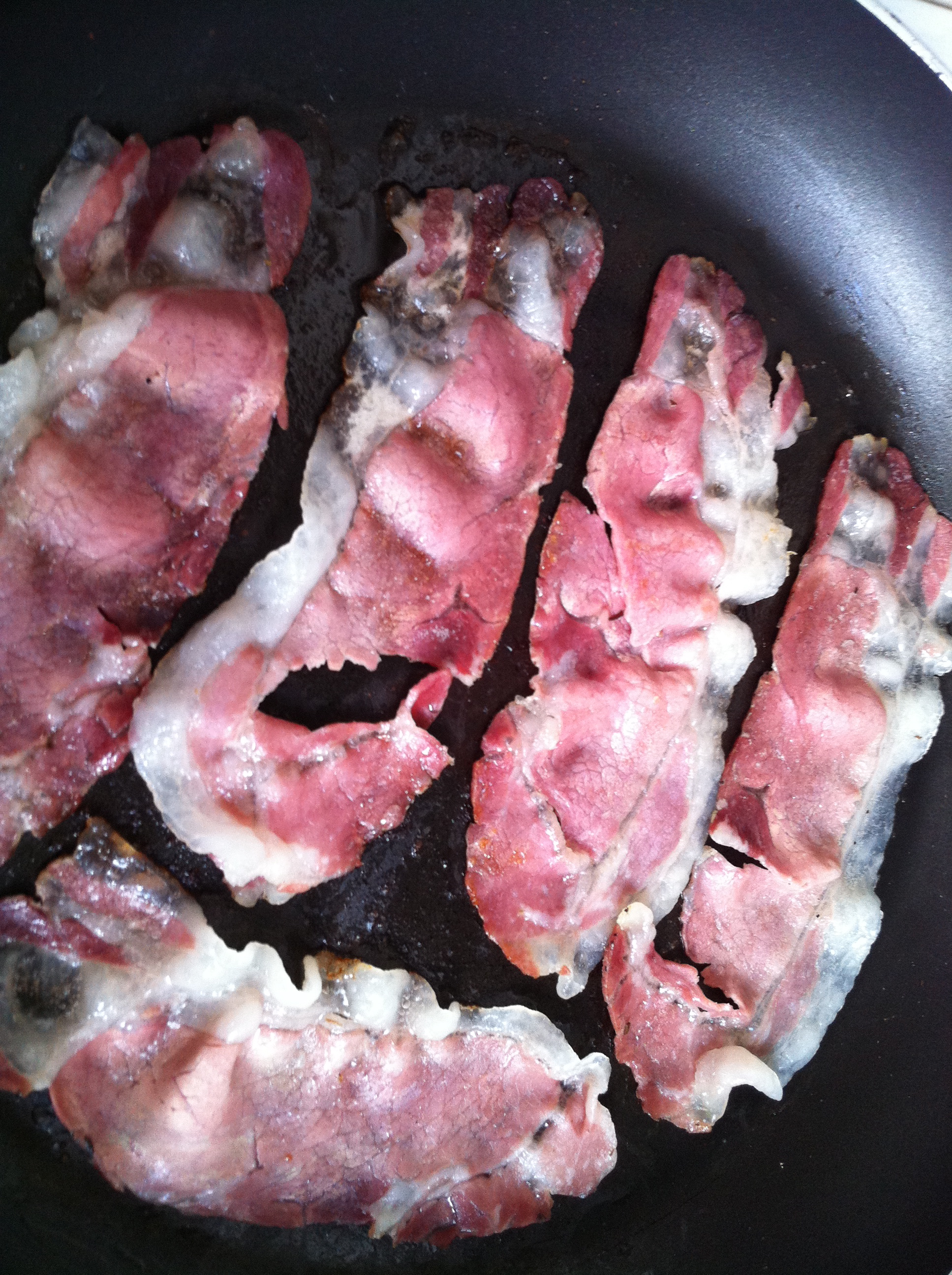
Beech Smoked Maple Bacon

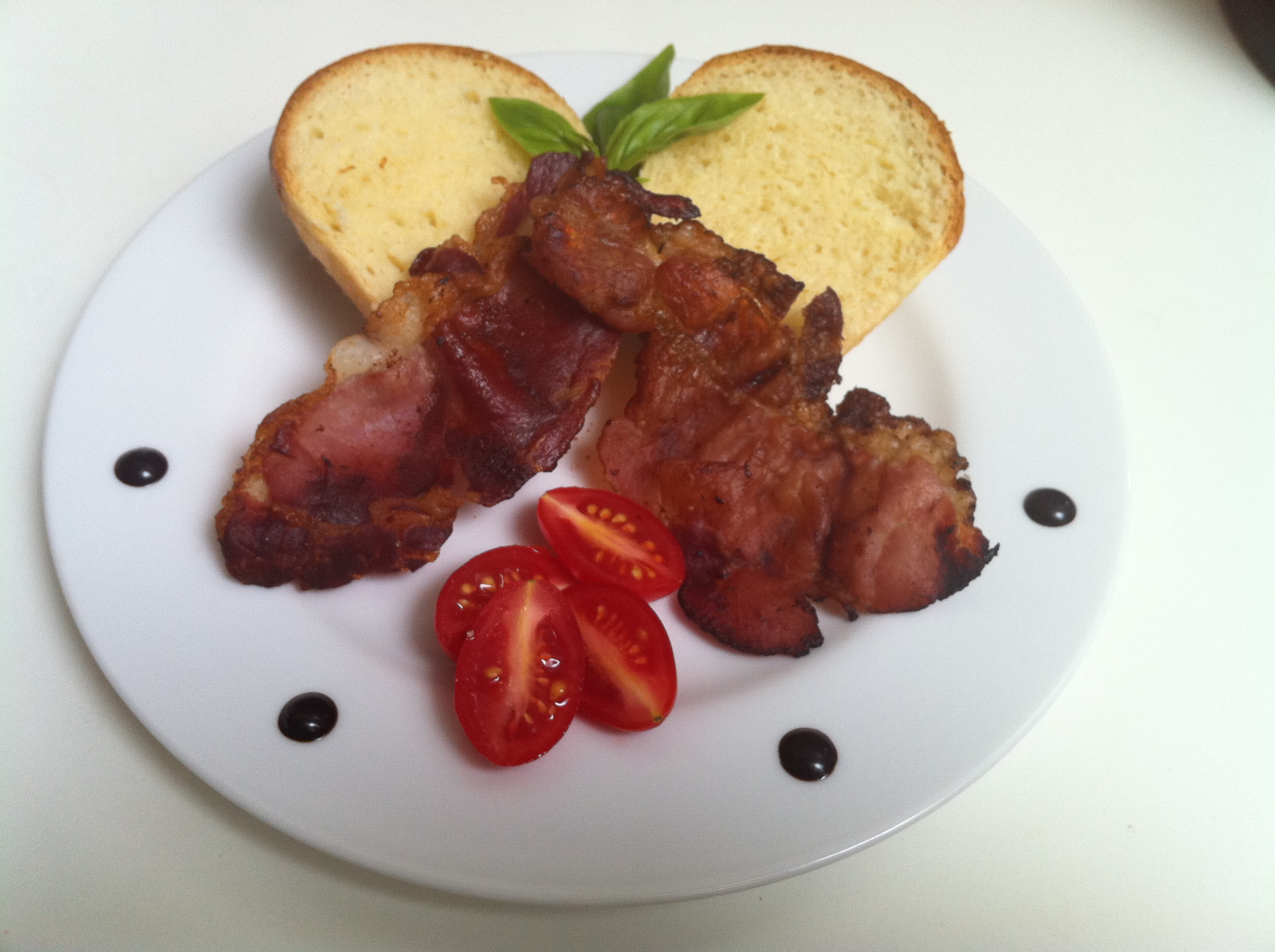
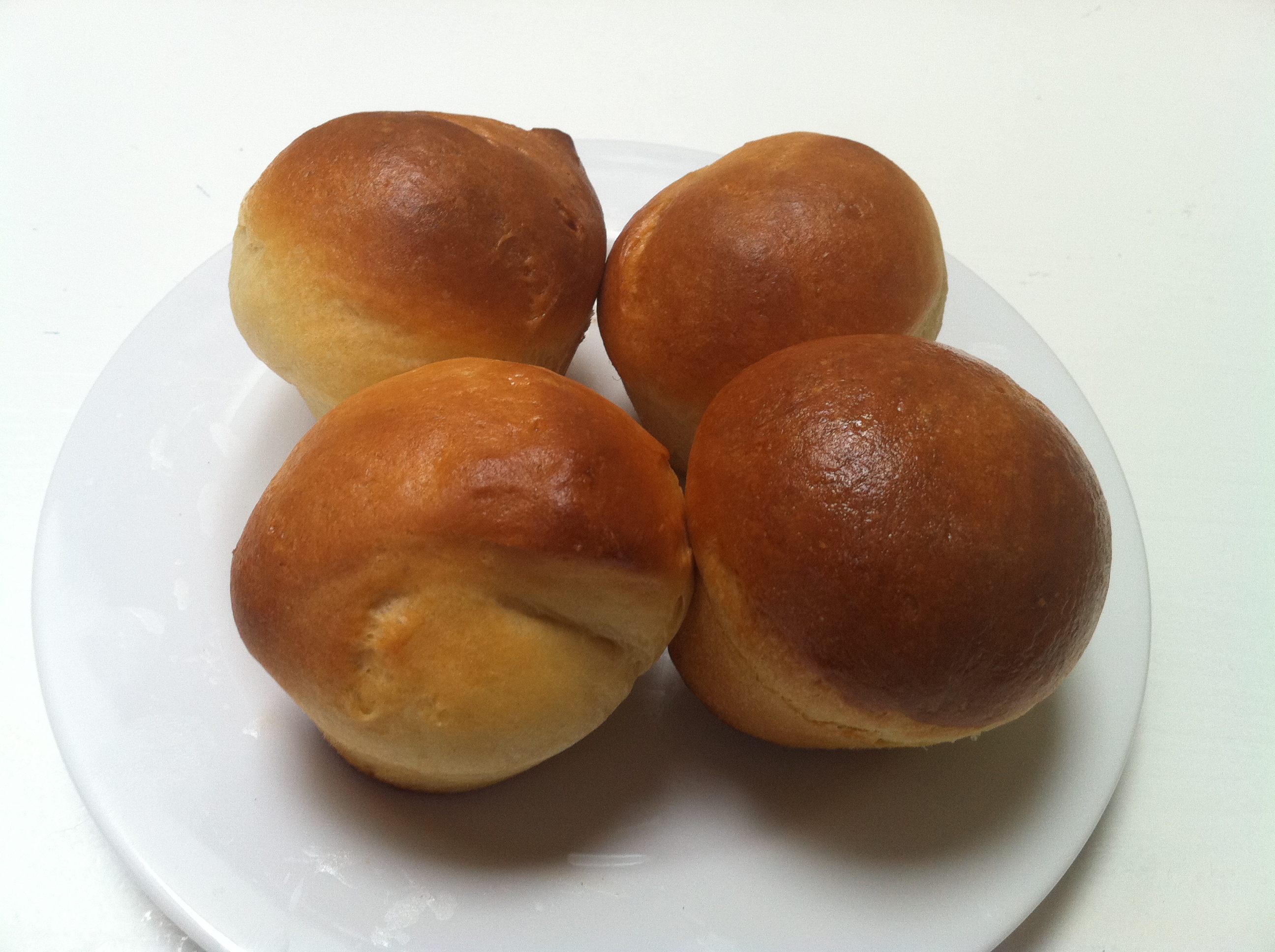
In the left pan sizzled the contender, full of the sweetness of youth and promise while in the right pan, quietly confident, herby and with hardly a splutter was the title holder – Real Bacon. The brioches came out beautifully and I can highly recommend the recipe. They are quite fun as individual little breads and will also make a fantastic french toast.

Brioche

The results unfortunately were inconclusive. Bella liked the maple bacon. Slightly less salty, a waft of beech smoke and the sweet fragrance of maple syrup. Of course she is the younger, more headstrong daughter and likes to challenge the old order (future lawyer). Julia is old school, preferring the herby favourite and not really tolerant of upstarts (“A” type first born). So of course in future I now have to cook 2 kinds of bacon every Sunday just to keep the peace. If you want to know which is best you’ll have to try them both and decide for yourself.

I learned long ago never to wrestle with a pig. You get dirty, and besides, the pig likes it – Cyrus Ching

Posted in Welcome | 5 Comments

Home is where the ……

This Sunday morning Commander J was channel surfing trying to find  terrestrial coverage of the Argus Cycle Race without any success. It seems that the R250 from my purchase of a TV license was used to fund a multitude of local soap operas but not the largest timed cycle race in the world. It does appear though that the SABC is managing their script writing costs extremely well as the plot used in all 5 soap operas is identical, they  just broadcast them out of sync. Personally, I still don’t know who killed JR but that’s for another weeks blog.

The Commander did manage to find a brilliant documentary called “Home” by Yann Arthus-Bertrand on CTV of all channels. This movie should be compulsory viewing in every school. It shows the destruction of the world by man’s greed but still manages to provide hope at the end. One of the “hot” topics in the world at the moment is the current consumption of meat, beef in particular, and the cost to produce it. As a producer of meat products and a citizen of the world I do feel morally obliged to behave in an ethical way but there is so much information floating around, much of it conflicting, that it is difficult not to get confused.

According to The Water Footprint Network it takes 5000 litres of water to produce 1kg of pork. Is this good or bad? Maybe it is a lot of water to use for some meat. It also takes 5000 litres of water to make 1kg of cheese. Mmmm see what I mean about confusing. Beef definitely is the bad boy though clocking a cool 16000 liters of water to make 1kg and not surprisingly, leather is even worse at 16600 litres. Cotton is not that great either, 11000 litres but I guess at least you get a lot more usage out of a cotton shirt than a pack of bacon.

The debate can go on all day and night and year but at some point we have to take some kind of action at a personal level if we want to make a difference. It would be very hard to argue against the fact that we consume too much of everything as a world in general. The huge disparity in wealth across and within nations results in feast and famine and we don’t seem to be very good at providing basic needs to everybody. 1 billion people don’t have easy access to clean water. Each year 60 million people die of starvation. If the USA reduced its beef consumption by 10% the grain and soy that would be saved would be enough to feed 60 million people. The numbers are huge but even the maths on that one is simple.

My own personal view is as follows:
– I know where the meat I use comes from, how it is reared, what it eats and where it sleeps
– I know what I do to produce my products, what goes into them and what comes out
– Everything in moderation, take what you need sparingly, less is more
– I don’t eat meat every day but when I do I enjoy it, particularly if I know where it comes from and that it has integrity
– I’d rather eat less of the best than compromise on quality for price (a bit like the butter/marge debate 😉
– Never run with scissors (from the instructions found inside an inflatable pool lilo made in china)
– I never really liked those leather pants anyway

We are just tenants on this world. We have just been given a new lease, and a warning from the landlord. – Arthur C Clarke, 2010

Posted in Welcome | 2 Comments

Charcuterie 101……….

Ok class, I thought I would do a bit of educating this week regarding the different parts of a pig used to make cured meats. The diagram below is a simple illustration of how a pig is divided up. – Please raise your hand if you have a question.

Pig Parts

Pig Parts

The cured meat that has the most unusual name is coppa. In Italian this means “nape” as in nape of the neck and is part 4 in the diagram. This is one of my favourite meats as the meat is sweeter and more succulent than the leg. The curing process involves a couple of weeks curing in a mixture of salt, spices and red wine followed by 3 – 4 months of drying. The meat is sliced very thinly and has a multitude of uses ranging from anti pasta platters to  panino filings. I have even used it to wrap springbok loins before roasting to keep the venison moist and add flavour. – No Charlie, the metal is spelt “copper”.

Most of you can guess what happens to part 12 – Prosciutto (the most mispronounced word ever – pro-shew-tow) which is “ham” in Italian. This product takes the longest to cure as it is the biggest muscle. We don’t add any spices to our prosciutto preferring to let the natural flavours come out and as they are pasture reared we get outstanding results. – Yes Charlie, we know that’s what you used to think the word meant.

6 and 7 go into salami. The shoulder meat is the only meat we use for salami to ensure that the final product is not too fatty and does not become “oily” as a result of using belly meat and fat. The salamis are cured in natural casings and we use a natural starter culture rather than any GDLs or other products used to speed up the drying process. This means that the product takes 4-8 weeks to cure but the flavour is less acidic. – Pay attention, no talking at the back please.

9 is the belly which is used to make pancetta. Pancetta is Italy’s answer to streaky bacon but is not injected with brine and can be eaten raw as the product is air dried for 6-8 weeks. The outside is rubbed with paprika, fennel and other spices and the flavour is far more intense than that of bacon. – No Charlie, Italy did not invent cooking.

5 is the loin and is used to make our famous bacon. Our bacon is not injected with brine and as a result the product has more flavour and does not give off a lot of water when it is cooking. We rub the outside with herbs and spices before allowing it to hang for 4 weeks. – Yes Charlie, this is an excellent gift for Mother’s Day especially if you cook your mom breakfast in bed.

Right class dismissed, don’t forget your homework assignments, no running in the corridors and no more fighting in the playground please.


Posted in Welcome | 5 Comments