Germ Welfare ………

20120720-131914.jpg

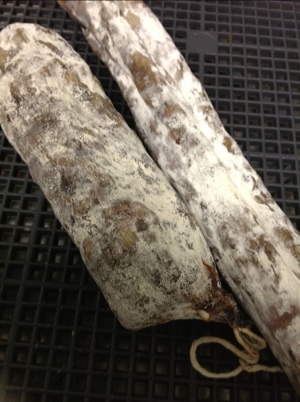
Last week I delivered some whole salamis to a retail customer. The gentleman who received the products and checked the invoice was reluctant to accept the stock due to the fact that the salamis had some white mould growing on the outside. He was convinced that the salamis were “off” and mouldy and should be rejected. It took his manager several minutes to convince him that it was actually a desirable thing to have on a salami and he should accept the order.

In the same week I read an article about a TED talk given by Dr Johnathan Eisen regarding the benefits of microbes in our lives. Microbes protect us from pathogens, they boost our immune systems, they can keep us slim, reduce stress and aid digestion. So what is that white stuff on the outside of the salami? The scientific name is penicillium nalgiovense and it is a fungus. It has a very important role in the curing process of a salami made in a natural casing as it prevents other harmful bacteria from growing on the product and imparts a characteristic nutty flavour.

Far more accepted and understood are the cousins penicillium camemberti and roqueforti which are similar strains of the penicillium family and are used in cheese making. My friend in goods receiving had no problem accepting a delivery of Brie from Fairview covered in white mould and was happy to inform me that gorgonzola was a good seller in the store. For the sake of clarity, penicillin the antibiotic is made from penicillium chrysogenum and is something I am allergic to however I suffer no side effects from eating salami or cheese (thankfully).

White mould will only grow on a salami that has matured slowly using a natural fermentation process. Commercial salamis that are made with GDLs will not have time to develop any moulds and are usually produced in plastic casings that inhibit mould growth. Next time you see a “mouldy” white salami make sure you appreciate the time taken to produce it and admire one of natures gifts to us.

“It’s a funny thing about life, if you refuse to accept anything but the best you often get it” – unknown

Posted in Welcome | 4 Comments

Interesting Times……..

live in do we (as Yoda might say). I’m referring to the debate regarding the traditional food pyramid and the new thinking around the benefits of a high protein diet. When I grew up a healthy diet consisted of lots of carbohydrates and starches, less protein and little fat or sugar. Today this thinking is being challenged by the likes of  Tim Noakes among others and I was interviewed yesterday by an Irish film crew making a documentary about a super sportsman who is testing out a high protein diet in an effort to avoid hereditary heart disease and diabetes.

Lunch?

Red meat has received lots of negative press in the past and has been linked to heart disease and cancer. A Harvard medical school study of 120000 people from 1986 to 2008 concluded that adding red meat to their diet increased their chances of dying from cancer by 10%, dying of heart disease by 18% and they were 13% more likely die early (source: Johnathan Benson, NaturalNews.com). Impressive stuff from a prestigious institution but with one fatal flaw. The red meat in question was grain fed feedlot beef. Or to put it another way, according to the Harvard study if you eat grain fed feedlot beef you are more likely to get cancer or heart disease.

Benson also mentions a study conducted by researchers at California State University and University of California that was published in Nutrition Journal in 2010 that evaluated the difference between grain fed feedlot meat and grass fed pasture reared meat. The research found that the omega-3 fatty acid profile in grass fed meat was similar to that of fatty fish. Grass fed meat was also higher in CLA, carotenoids and vitamin E tocopherols which protect against cardiovascular disease and cancer. You can read the rest of the article here.

Mmmmm gets a bit confusing after a while doesn’t it. According to ibergour.co.uk, a supplier of acorn fed pasture reared Iberean ham, the fat of Iberico belotta ham contains 55% oleic acid which has a proven beneficial effect on cholesterol, lowering LDL and raising HDL levels. The only fat with higher oleic acid is virgin olive oil. So eating the fat from the ham can be good for your cholesterol levels. The hams also contain vitamins B1, B6, B12 and folic acid as well as vitamin E, copper, zinc, calcium, magnesium, phosphorus and selenium, all of which have health benefits. The diet of the pigs plays a major role in providing these nutrients in the meat.

I think it is fairly intuitive that eating pasture reared meat that has not been given hormones or preventative antibiotics, has lead an active life and eaten a natural diet is better for you than eating feedlot meat. You can see more here in this clip from Joel Salatin about feeding cattle grass and not grain. I’m not sure if I’m ready to give up carbs though. Freshly baked ciabatta with a drizzle of Prince Albert extra virgin olive oil is one of the simple pleasures of my life and I would be sad to have to deny myself forever. I think my personal eating plan may well end up as a food tower instead of a pyramid – everything in moderation. I also want to know the provenance of my food for 2 reasons. Firstly to ensure my health, I have plans for when I am 80 and want to make sure I can enjoy them. Secondly, as an omnivore I want to be sure that what I consume has been produced ethically and with integrity.

That’s just me.

Posted in Welcome | 1 Comment

Therein lies the rub …..

Crispy Bacon

I’m currently on a bit of a bacon crusade. Certain members of my family call me the Boss of Bacon and at times in my fantasy world I imagine myself defending innocent bacon lovers against the perils of pumped commercial bacon. My musings have not yet progressed to what super hero outfit I should wear and the thought of wearing tights is not that appealing so I will leave it to Gaga to do the public, meat wrapped display while I focus on this blog instead.

Last week I wrote about the ingredients listed in a packet of commercial bacon. It was in an effort to educate consumers about what they are eating and to try to make them question the provenance of their food. This week I have a test for you to try at home which will help to illustrate this further.

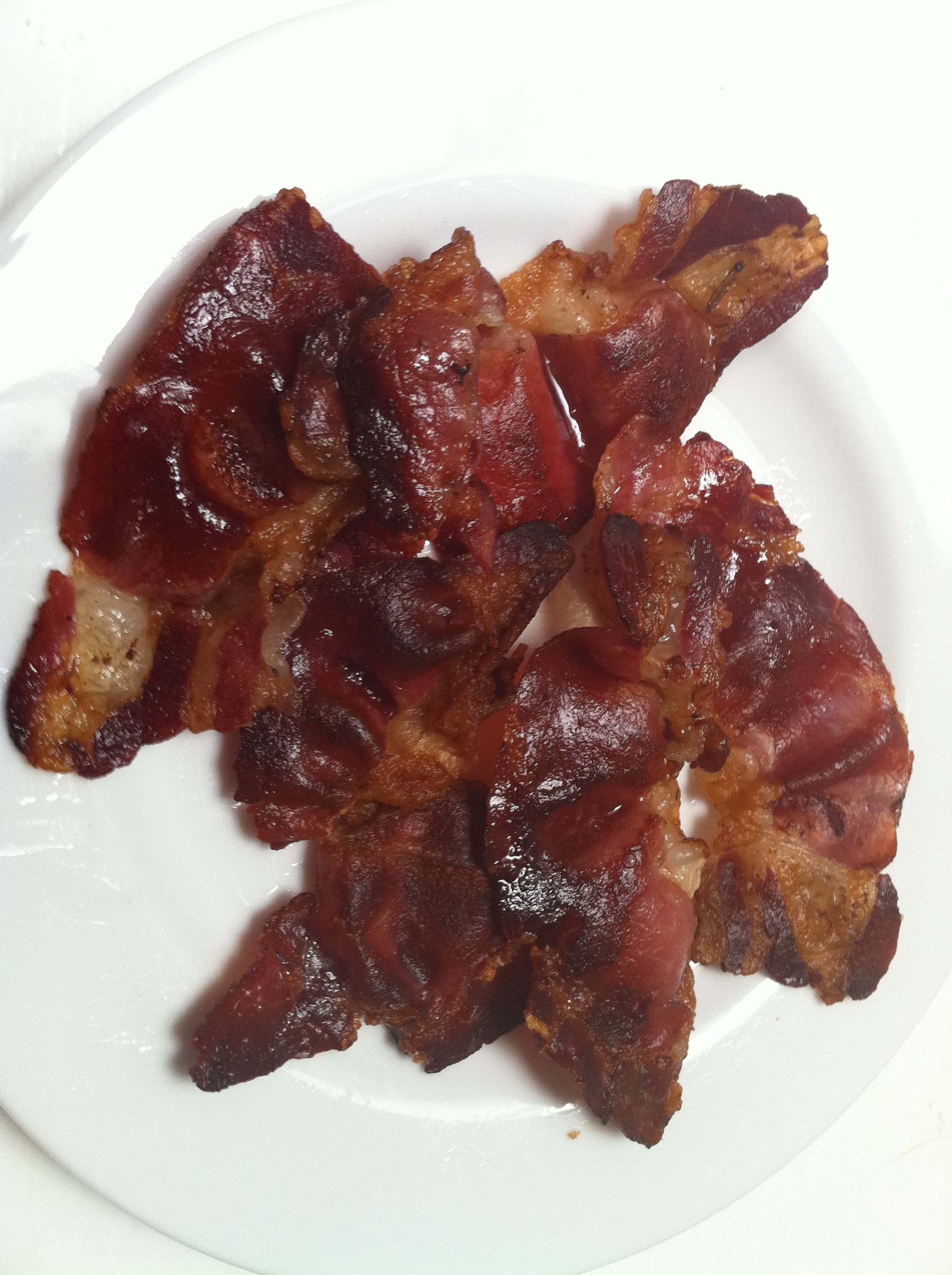
Commander J likes her bacon crispy, hence so do I (luckily we agreed on this from day one) . We won’t debate the merits of crispy bacon vs sloppy rashers as this is one of those infinite debates that rivals how well done a steak should be, ketchup or mayo with chips, Beatles vs Stones etc – you know what I mean. I bought two packets of that “other” bacon and cooked them to the required level of instant disintegration. I also cooked up our flagship bacon product which is arrogantly named “Real Bacon” to test how much water is added to commercial bacon. This was something I decided to do for fun and the result was not measured scientifically and was based on one sample test but the outcome was interesting. Both packs of commercial bacon started off at 250g and after cooking to the same level of crispiness (based solely on my opinion) the average weight was 82.5g. What this means is that 67% of the product evaporates in the cooking process. The real bacon started at 160g and ended up at 80g – A loss of 50%. The end result was about 80g of crispy bacon in all 3 instances but the big difference is the starting weight.

Try this at home if you are skeptical and if you are mathematically inclined and are tired of watching reruns on the series channel you can work out what you are paying per litre of water that is pumped into commercial bacon. I have not even mentioned the taste – That is a personal preference and I leave that experiment for you to do in your own way.

One last thing from the Boss of Bacon. In case you didn’t know, we make the following :
– Real Bacon
– Streaky Bacon
– Smoked Bacon
– Honey Bacon
– Asian Spicy Bacon
– Nitrate free Bacon
– Pancetta
– Salt Pork
– Crispy Bits

Nuff said.

Posted in General, Welcome | Leave a comment

The Tipping Point….

by Malcolm Gladwell is one of my favourite books. I have read it twice in the past 10 years and enjoyed it equally both times. For those who have not read it I will summarise the basic premise as follows (with apologies to Malcolm for any errors):

A new idea or trend or fashion becomes “mainstream” as a result of an epidemic caused by three types of people. Firstly you need “Connectors” – People who know a lot of people from different social circles and can spread the word. This is a person that mingles with the A set, comes from the B set, married into the C set and works with the D set and can interface between them all.

Next you need “Mavens” – that guy that knows every minute piece of information about a subject. The one you contact when you need the latest piece of technology but are overwhelmed by all the information around the topic. This is the person who knows the difference between an LCD and an LED, how many cylinders are in the soon to be released Audi Q21, where to go to buy the cheapest Levis or the best sushi or how many megapixels you need in your next DSLR (I think it is something to do with a camera).

Lastly you need “Salesmen” – Someone that can sell and convince other people to buy into something. We are not just talking insurance and used cars here. Salesmen are born with an ability to persuade another human being to make a decision based on their advice. They derive their energy from closing the deal and are usually able to transfer their skills across industries fairly easily as the nature of the product is of secondary importance.

Two other factors play a very important role in the spread of an epidemic. The stickiness of the message and the context of the message. The stickiness of a message is how well it is understood and remembered. The book details a couple of different examples of television programmes (Sesame Street, Blues Clues) and adverts to illustrate their effectiveness and how the correct packaging of a message can affect it’s stickiness.  Gladwell sums it up as follows –  “ideas have to be memorable and move us to action” .

Context provides another set of interesting factors that can influence an epidemic. In the eighties New York city crime levels were at an all time high and the public transport system was greatly affected. The trains were covered in graffiti, $150m was lost per annum on fare dodgers and people did not feel safe to travel on the trains. One specific event that helped trigger the tipping point against this situation was the shooting of 4 youths on a train by Bernie Goetz. Bernie was being harassed by them during his train ride and pulled out a midnight special, shooting each of them in turn and paralysing one for life. He was arrested, subsequently acquitted, regarded as a hero and people celebrated his release with impromptu parties in the streets of NYC.

The situation of lawlessness on the trains was addressed in two ways. Firstly the graffiti on the trains was removed. Every day any train with graffiti was repainted, no carriage was allowed to operate if it had any graffiti on it.  This process took 6 years at which point the authorities then tackled fare dodgers. Extra manpower was deployed, mobile police stations were set up and criminals were processed in under an hour. Police were able to check prior records of fare offenders and search them for drugs and weapons. Eventually crime levels came down dramatically and people felt safer. The theory behind this approach is called the “Broken Windows theory” and was developed by James Q. Wilson and George Kelling. They argued that if a broken window is not fixed it sends a message to people that nobody cares and nobody is in charge. This leads to more broken windows and further anarchy and chaos. The result is that “anything goes” and more crime is encouraged. The subway in NYC in the early eighties provided a context for crime. It was dirty, trains constantly ran late, fare dodging was rife, the carriages were covered in graffiti, in effect “the windows were broken”. Changing 2 seemingly small factors reversed this epidemic and resulted in a decrease in crime in the city. Once again I have simplified things and for the full story with references please read the book but the message is fairly simple to understand.

I decided to write this post after a trip to a leading supermarket recently. The objective of the trip was to get some fruit for breakfast but I ended up in the processed meat aisle during my wandering and happened to read the label of the bacon on offer. I don’t normally do this but was unpleasantly surprised to read the following ingredient declaration: Pork, Salt, Maltodextrin, Dextrose, Acidity Regulator, Phosphates, Antioxidant: Sodium Erythorbate, Flavour Enhancers, Spice Extracts, Colourant, Sodium Nitrate, Sodium Nitrite, Potasium Nitrate, Natural Smoke Flavourant

I don’t even know what some of these ingredients are used for and I make bacon. I use pork, salt, herbs, spices and sodium nitrate and nitrite for preservation. I also make a bacon without any preservatives for those who prefer it. I do know that phosphates are used to keep the water that is injected into the meat from coming out and dextrose is a form of sugar but really – flavour enhancers, colourant and even though it is labelled “Smoked Bacon” it is actually just smoke flavoured liquid that is added to the meat.

So I wonder what it will take to create a tipping point in bacon. Who are the mavens that will know the difference between pasture reared and feedlot, brine injected and air dried, smoke flavour and colourant. Do we have connectors that can disseminate the information from mavens and who are the salespeople that will sell the story. The message is sticky – do you care what you eat?

Will you act on it though?

Posted in Welcome | 4 Comments

Making a Splash….

My PR company – Splash have just been voted the best PR agency in South Africa at Sunday nights Prism awards. Well done to Kerry, Doug and the team for promoting Table Mountain as one of the new seven wonders of the world. Their campaign was fraught with tension, stress and emotional upheaval but the hard work paid off and South Africa will no doubt benefit from the PR for years to come. I have certainly reaped the benefits of their hard work in the past and look forward to working with them in the future.

More exciting news is that I have been able to secure a regular supply of pasture reared beef from Angus Mckintosh of the Spier biodynamic farm. He raises cattle, sheep and chickens along the same lines as Joel Saladin at Polyface Farm in the good old US of A. Take it from me, this beef tastes different. It is grass fed (cattle are ruminants you know) and has a beautiful colour and texture.

Pasture Reared Bresaola

The Commander is on a protein drive currently and what better excuse for a bresaola, artichoke, mushroom, avo and rocket salad as a light meal. The recipe below is really quick and simple and could easily be served as a starter too, just halve the amounts.

Bresaola, Artichoke, Mushroom, Avo Salad

Ingredients for 2 people
160g bresaola
2 tablespoons pesto
juice of 1 lime
2 tablespoons olive oil
6 portobellini mushrooms, sliced paper thin
4 artichoke hearts, quartered
1 avo, sliced
baby salad leaves

Mix the pesto and the lime juice and olive oil together to make a dressing. Arrange the mushrooms on a plate and paint with the pesto dressing. Arrange the bresaola on a large dinner plate in a single layer. top with slices of marinated mushroom, artichoke quarters, slices of avo and a handful of baby leaves in the middle. Pour over any remaining dressing and add a good grinding of black pepper.

“Yummy” said Commander J!

Some variations to this recipe:
– Use horseradish as the base of the dressing instead of pesto
– Add capers, pickled radish, shaved parmesan, pine nuts or any combination of these instead of artichokes and mushroom

– A culture that just uses a pig as a pile of protoplasmic inanimate structure, to be manipulated by whatever creative design the human can foist on that critter, will probably view individuals within its community, and other cultures in the community of nations, with the same type of disdain and disrespect and controlling type mentalities – Joel Salatin

Posted in Welcome | Tagged | Leave a comment

It’s been so long ……..

Frankie Fenner

Frankie Fenner Meat Merchants

since my last post and I feel a literary lethargy and general rustiness which must be expunged. So much has happened it is hard to know where to start so a general update is required:

– December came and went in a blur. We started the festive season with the fantastic Food Wine Design show in Hyde Park and things went from strength to strength thereafter.

– The new year has kicked off with a bang and in addition to our range of cured meats we are supplying the fabulous Frankie Fenner Meat Merchants with selected cuts of fresh pork. These new arrivals are adding a whole new dimension to Kloof Street as Cape Towns food savvy carnivores flock to buy the cut of the week and see what Andy is wearing today. Their sandwiches are also growing a cult following and pre orders are essential to avoid disappointment.

– The diary for this year is already nearly full and we will be at all three Good Food and Wine shows (our Durban debut) as well as the Cheese Festival in April, Constantia Food Fair in May and of course the Food Wine Design again in November.

– On a sadder note, Glen Oakes farm was affected by a fire in the region and three of our special pigs were lost. Fortunately the only other damage was to the pastures but the repairs and recovery will take months of hard work.

Ok well enough jibber jabber, I’m off to work on the Bastardo (our hottest chorizo yet) and final tweaks to our newsest bacon – oak smoked honey bacon. Gardeners Glory have supplied us with a bee hive in our garden and while Commander J waits impatiently for our first harvest we have some beautiful veld honey to use in the mean time.

– Sometimes, if you stand on the bottom rail of a bridge and lean over to watch the river slipping slowly away beneath you, you will suddenly know everything there is to be known – Winnie The Pooh

Posted in Welcome | Leave a comment

Take what you need……..

Sardine Run

Noordhoek hosted its very own sardine run on Saturday and we were fortunate to be present. We received a tip off from the soon to be professional SUP Chalky Le Roux that the shiny little omega 3 delights were to be found in knee deep waters on the beach. This was my first real live experience of such an event and it was nature at her finest. The seals were herding the little buggers into a corner of the beach and then picking them off at their leisure while excited children scooped them up in their hands and the more organised adults used nets and milk crates to catch them.

Commander J proved to be rather adept at grabbing them from the shallows and we had a packet of 12 sardines within minutes. It was one of those perfect days that cause tourists to buy a beach house in South Africa on impulse. The wind was a gentle breeze, the water was turquoise, sun, seals, sardines, seagulls and surfers. We spend a while watching the activities taking place in the ocean and finally left with our spirits lifted as though we had imbibed in a restorative tonic.

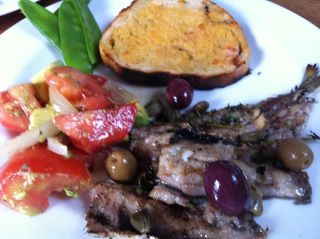
Salty watching his lunch

Sardines are a bit finicky to prepare but when they are fresh they are delicious and most certainly worth it. Most South Africans regard sardines as only good for bait which is a shame as they are available in abundance and are extremely healthy as they are rich in omega 3 fat. Clean and gut them outside if you can as they have a lot of scales and it is messy work but not too complicated. Once gutted either leave the head on or take it off, the choice is yours. I chose to braai ours with olive oil and thyme but you can also bake, grill or fry them and they have a robust flavour that goes well with herbs, tomato and spicy condiments.

Sardine Supper

Nature provided us with a glorious day and a free lunch which doesn’t happen too often. Fortunately we were able to appreciate it and enjoy it in between the hustle, bustle and stresses of everyday life. My only hope is that we don’t get to the point where I end up telling my grandchildren about how we used to catch sardines with our hands they were so plentiful, while they are only able to read about them in the chapter on extinct species.

Take only what you need for today or there won’t be any left for tomorrow.

Posted in Recipes, Welcome | Tagged | 1 Comment

In His Master’s Class……

Gnocchi with Asparagus

It’s been a busy couple of weeks. Christmas planning, new products to develop, a visit to Prince Albert, a charcuterie course to plan for next year, supper to cook for the Commander, shoe boxes to fill with presents and that’s on top of the usual daily routine. Which is why having a gourmet meal cooked by Cape Towns chef to the rich and famous, Neill Anthony, was such a treat. The Commander and I attended his master class at the Bosch showroom in Montague Gardens and our taste buds were dazzled by his delicious and creative concoctions.

The menu consisted of home made gnocchi with asparagus, baby chicken with broad beans and fennel puree and finished off with treacle tart and lemon confit. Sounds pretty simple and it was pretty simple and that is why it was so delicious. Each dish was made from top quality ingredients and Neill certainly understands how to combine food to bring out the best from each component without being too complicated or fussy.

How often have you gone out to a restaurant and been disappointed with the meal that was served to you. Personally I find that this is usually a combination of inferior ingredients, a lack of understanding how they fit together and a tendency to over complicate dishes. Of course don’t forget the obligatory 75 word paragraph on the menu describing each dish and every ingredient in it along with some culinary prose that would have made even the bard blush.

I prefer things to be simpler. Maybe that is a reflection of my character and I’m sure the Commander will have a few choice observations at this point. But don’t confuse simple with easy and remember that it takes a confident chef to put a simple item on the menu. Let’s take Neill’s starter as an example – Home made gnocchi with asparagus. The dish is made with three components namely the gnocchi, the asparagus and parmesan cheese. Simple indeed but here’s the rub:
– The potatoes are organic and are baked first before being mashed, boiling makes them watery requiring more flour in the gnocchi which in turn makes them chewy
– The asparagus come from urban legend farmer Matt Allison and were picked that day and had not even seen the inside of a Bosch fridge
– The asparagus were grilled not boiled to concentrate the flavours
– The gnocchi were boiled then pan fried in butter to give them a delicious crusty outside and a soft creamy inside
– The parmesan was freshly shaved and liberally added to the gnocchi from a big wedge and was not those dried out crumbs that mice ignore

It is not a 5 minute meal and it does take a bit of planning and effort but it is not complicated and I really wish I could order it next time I have to go out for a meal instead of some boiled imported dumplings with canned sauce, sprinkled with cardboard droppings and a bowl of rehydrated garlic on the side. Sadly I know the only way to experience this again is to make it at home or get invited to the Anthony mansion. The Commander has recently moved from subtle hinting to outright orders so I think I will be making gnocchi this week.

Of course it does help to have a pocket limey sous chef called Matt doing all the hard work and burning fingers while peeling hot baked potatoes while the master swans around taking the credit and telling stories about the time he taught Gordon how to make a souffle but at the end of the day Cape Town could use a few more chef’s like Neill (with two ll’s) Anthony!

– The value of an idea lies in the using of it – Thomas Edison


Posted in Welcome | 2 Comments

It’s Simply A Matter Of…..

Taste! And according to the old adage, there is no accounting for it either. Which is a good thing really otherwise the world would be a pretty boring place. I was recently approached by wine PR guru Nicolette Waterford to put together a range of salamis for Overhex Wines to use in a salami and wine pairing. The tasting was launched on the 7th of September to celebrate international salami day. Nicolette is more effervescent than a bottle of MCC and she combined 6 different salamis with a range of white, red and rose wines. Some of the combinations sound a little out there but they actually work really well with the chosen wines. The tasting is on offer at the Overhex tasting room and is well worth a visit just for the wines.

Salami Tsunami

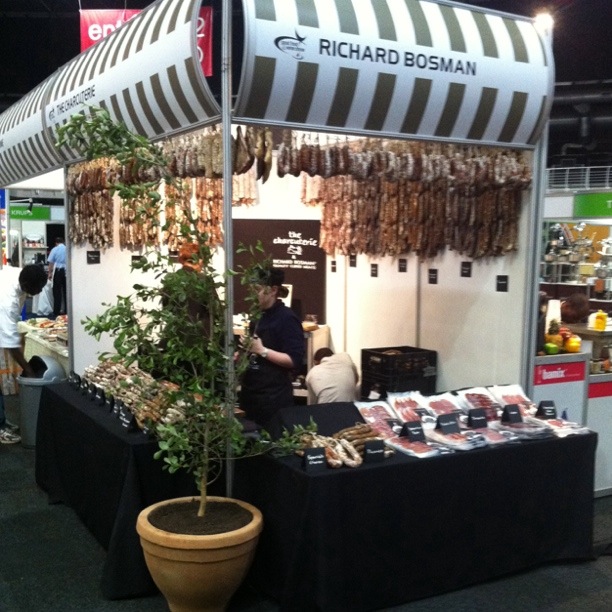
Onto other matters of taste, thanks to all the people of Johannesburg who came and supported us at the Good Food and Wine Show last week. It was a fantastic success and the response was incredible. Thanks also to all who helped out at the stand over the 4 days. The products are now available at The Cheese Gourmet, Braeside Meat Market and the new Neighbourgoods Market in Braamfontein.

Good Food and Wine Show

I spent my time in Jozi with an old school friend, James Brice who very kindly put up with me, my poor navigation skills and my meats (he is a veggie but means well). He is very involved with sustainability and is working on a book which makes for fascinating reading. In the not too distant future I hope to blog about bio-diversity, sustainability and the tipping point but I first need to convince James to try a bacon croissant.

Don’t you wish there was a knob on the TV to turn up the intelligence. There is one marked brightness but it doesn’t work – Gallagher

Posted in Welcome | Leave a comment

Jean Claude and I…..

have a few things in common. Ok maybe that’s a bit of a stretch. We have exactly 2 things in common – a propensity to use words only when absolutely necessary ( I only have his celluloid works to base this on ) and some Belgian heritage. The Muscles from Brussels seems to have conquered Sunday nights on eTV and must be the most broadcast actor on that station. I am not really a fan of his movies but do enjoy the diversity found in the scripts and use it to brush up on my communication skills when there is no wet paint to watch.

Brussels on the other hand is famous for 3 things. We have discussed the first, namely the famous JC. The second is that Brussels has been voted the most boring city in Europe. Luxembourg are insisting on a recount of the votes and until this dispute is resolved we must delay the celebrations by either watching eTV or finding a freshly painted park bench.

The third thing really is exciting though – Moules or the other kind of mussels. Moules and frites is the national dish of Belgium and what a well chosen one it is. We are so fortunate to have an abundance of mussels along our coastline and one can combine a day out at the beach with foraging for food and ending up with a delicious simple meal.

Mussels

Of course you can’t always get to the beach on a Wednesday afternoon to pick your mussels. Some of us are inconvenienced by trivialities such as work or blogging. I was fortunate enough to be at the Starlings Urban Market last Wednesday and bought a kilo of fresh mussels from Ocean Jewels which were beautiful. Looking around the market for inspiration I grabbed the last chorizo, picked up a jar of organic cream and was so glad I did not drink the last Steph Weiss in the fridge on the weekend.

Beer Mussels with Chorizo

I have based this dish loosely on Christian Campbell’s delicious mussel starter at Delaire Graaf in Stellenbosch but without the subtlety, finesse and a few trimmings. I hope he will forgive me.
This is what you need to do:
– chop an onion, not too fine and not too coarse
– fry it in a little butter until soft
– add 1 kg fresh black mussels (beards removed)
– add one of your favourite beers
– cover and simmer until the mussels have opened
– remove the mussels and reduce the beer sauce by half
– add a handful of Soba noodles to the beer sauce
– in the meantime remove the mussels from the shells, discarding any that remain closed
– once the noodles are cooked add some sliced chorizo and 100ml cream
– simmer for 2 minutes and add the mussels
– add a dash of worcestershire sauce and black pepper to taste
– don’t add any salt as the mussels and chorizo provide plenty of that
– garnish with chopped chives and parsley

It’s not quite a soup, it’s not quite a pasta but it is delicious as a starter or a main, especially on Sunday nights just before the 8pm movie on eTV.

– Sometimes I’ve believed as many as six impossible things before breakfast. – Lewis Carroll

Posted in Recipes, Welcome | Tagged | 2 Comments